Why Some Projects Feel Effortless and Others Feel Impossible: The Science of Momentum
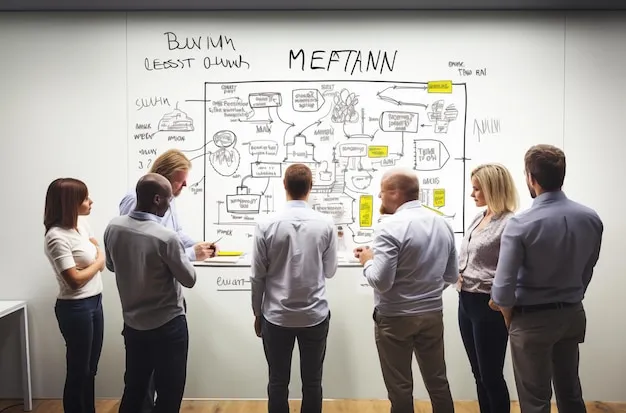
Photo: business team collaborating energetically around conference table with project timeline on whiteboard, via img.freepik.com
There is a particular kind of project that every professional recognizes. The team is aligned. Decisions happen quickly. Each completed milestone seems to generate energy for the next. Work that would ordinarily feel burdensome instead feels almost inevitable. Progress is not just steady — it is self-reinforcing.
And then there is the other kind.
The one where every meeting surfaces the same unresolved questions. Where approvals take weeks. Where team members arrive with diminishing engagement and depart with growing frustration. Where the project technically continues but forward motion has become a polite fiction maintained by status reports.
The difference between these two experiences is not always methodology, budget, or talent. Often, it is momentum — and momentum is something most project management frameworks barely acknowledge, let alone actively manage.
Momentum Is Not Metaphor — It Is Mechanism
In physics, momentum describes the tendency of a body in motion to remain in motion. The principle translates, with remarkable fidelity, to the world of project execution.
Projects that are moving generate their own sustaining energy. Small wins build team confidence. Visible progress reassures stakeholders and reduces the frequency of disruptive oversight interventions. Decisions that might have been contentious in a stalled environment get made quickly when the team believes the project is succeeding. Momentum, in other words, is not simply the result of a well-run project — it is itself a driver of project performance.
The inverse is equally true. Stalled projects do not merely fail to progress. They actively deteriorate. Team engagement erodes. Stakeholder confidence weakens. The organizational appetite for continued investment diminishes. What began as a temporary slowdown becomes a self-reinforcing state of inertia.
This is why momentum management deserves to be treated as a distinct and serious discipline — not a soft concept, but a structural variable that project leaders must monitor and actively cultivate.
What Kills Momentum Before You Notice It
Momentum rarely disappears in a single dramatic event. It is more commonly eroded gradually, through a series of small friction points that accumulate into paralysis. Understanding the most common culprits is the first step toward prevention.
Unresolved ambiguity at the front end. Projects that launch without genuine clarity on objectives, ownership, and success criteria are building on unstable ground. The first time the team encounters a decision that requires that clarity — and discovers it does not exist — momentum takes its first hit. Subsequent encounters compound the damage.
Stakeholder disengagement. Few things slow a project more reliably than sponsors and decision-makers who are nominally committed but practically unavailable. When the people with authority are not present, the people without it cannot move. Waiting becomes the default operating mode.
The absence of visible wins. Long-horizon projects with infrequent milestones deprive teams of the psychological fuel that visible progress provides. Without a steady rhythm of accomplishment, even high-performing teams begin to lose their sense of direction and urgency.
Competing organizational priorities. When the business signals — through resource reallocation, executive attention, or budget scrutiny — that other initiatives matter more, teams internalize that signal. Their energy follows organizational priority, whether anyone intends it to or not.
Restoring Motion to a Stalled Initiative
If your project has lost momentum, the recovery path is not simply to push harder. Pressure applied to a stalled system without addressing the underlying friction typically produces resistance, not progress. The more productive approach is diagnostic.
Identify the actual blockage. Is the project stalled because of a specific unresolved decision? A resource constraint? A team dynamic issue? Generalized urgency is not a remedy. Targeted intervention is. Name the specific thing that is preventing forward motion before prescribing a solution.
Create an immediate win. One of the most reliable techniques for restoring momentum is engineering a near-term, visible accomplishment — even a modest one. Completing a discrete deliverable, resolving a long-pending question, or closing out an open issue reactivates the team's sense of forward motion. The win does not need to be large. It needs to be real.
Re-establish a decision rhythm. Stalled projects frequently share a common characteristic: decision-making has become irregular or absent. Reinstating a clear, predictable cadence — even a brief weekly session dedicated exclusively to resolving open items — can dramatically accelerate project velocity.
Reconnect the team to the outcome. When projects drag, the daily experience of execution can disconnect from the strategic purpose that originally motivated the work. Leaders who take time to reframe progress in terms of the ultimate business outcome — not just task completion — consistently report improved team engagement and renewed drive.
The Opinion That Matters Most
Here is a perspective earned through direct project experience: the organizations that consistently deliver on their project commitments are not necessarily the ones with the most sophisticated methodologies. They are the ones that understand how to keep teams moving.
They structure projects to generate early wins. They resolve ambiguity before it becomes a bottleneck. They protect their teams from the momentum-destroying effects of organizational noise. And when a project stalls, they treat it as an urgent problem — not a scheduling variance to be managed on a spreadsheet.
Timeline management tells you where you are. Momentum management determines where you are going.
At Mr. Lee Projects, we treat momentum as a deliverable — something that must be built deliberately, protected actively, and restored quickly when it falters. Because a project that keeps moving is a project that keeps winning.